
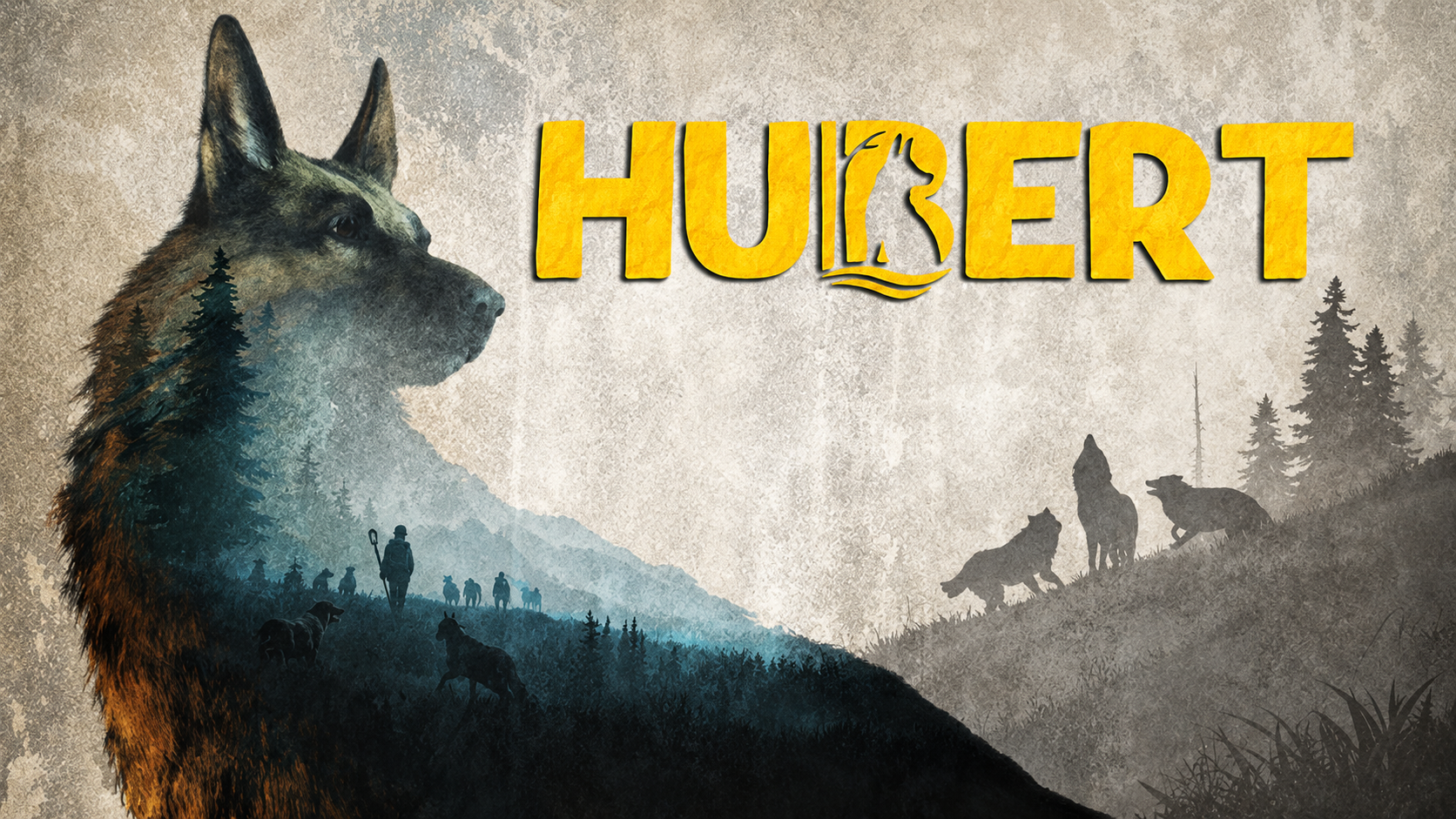
To be the very first time I’m writing here on Kotaworld, starting with Hubert isn’t exactly what I expected. Yet it’s not a bad work, especially if we’re talking about Brocap Studio’s very first effort: if only it had been more carefully polished overall, it would have been a much more enjoyable and immersive experience than it actually is. But let’s take a closer look at the finer details.
The title is a single-player adventure that tells the story of Hubert, a loyal dog belonging to Lily, who is forced to work for a gruff mountain man to manage the flock due to financial difficulties. Hubert is not a trained herding dog, but after managing to get through the situation and convincing the old man, the two manage to secure a place to live. However, peace is interrupted by a pack of wolves intent on attacking the flock. Our protagonist steps forward as a hero but is defeated, and just as the pack leader prepares to deliver the final blow, a mysterious figure saves him. From there, the adventure begins.

If you’re choosing from which painful button to start, this would certainly be the gameplay, which turned out to be too packed with things to do (for this reason I’ll focus only on the main aspects) and penalised by technical bugs and by a performance that’s not quite ideal. I’m referring especially to the dog’s running movements, which tend to slide with every change of direction and accelerate up to 120 km/h (approximately) at every single downhill slope that appears ahead, making it impossible to maintain character control. Other painful buttons are undoubtedly the grazing moments, as well as the supposed “cozy” moments of the game. Indeed, through the barking mechanic, Hubert can gather both people and sheep and bring them to points of interest. But, if people actually follow a logical path (or at least not too frustrating), sheep tend to wander aimlessly: which is also obvious, so obvious that the developers added guidelines to indicate to the player the path these will take. Unfortunately, they don’t even follow those, and often veer into directions so random they inevitably get stuck against objects or the ground itself, forcing me to reset several times.
I like the exploration aspect, encouraged by the "pee", "poo" and "howl" spots to find around the area to collect items and mark visited locations, and greatly aided by the "dog sniffer" mechanic: a mode that lets us follow a trail to progress through the game and find key objects. I, who easily get lost, managed to appreciate it, though I'd recommend keeping this mode rather than the paw-shaped compass in the top right corner, otherwise it's genuinely too easy.
The most successful part is the characters, but only because their style is very classic, if not exactly what one expects from a game of this kind. We have, in fact, the protagonist, Hubert, courageous but clumsy, who can never stay out of trouble but who always knows how to get out of it with his head held high; or the naive girl Lily, ambitious and stubborn, who has to endure the prickly nature of the old man she works for, who has become that way due to a painful event he still carries with him. In short, I have the feeling that if I removed the protagonists’ names and left only their descriptions, I’d have the same story treated in a thousand different ways.
It’s even more disingenuous than that: the “villain” of this story, namely the wolf that attacked Hubert at the beginning, was supposed to be the pretext for discussing a conflict between two opposing worlds — namely, the human world and the wild one. Yet, he’s simply evil because he wants to be, and, by itself, he wouldn’t have been a bad guy, provided he had been properly contextualised and explained in some way. All of this, as previously anticipated, combines with a genuinely non-existent direction: the cutscenes are mostly saved by the interpretive skills of the voice actors, since the animations are wooden and unnatural, but not by the dialogue, which often veers into the banal. Indeed, Hubert’s lines are the most irritating of all, due to various audio bugs that cause him to repeat the same phrases consecutively — and sometimes even at a higher volume than usual.

Essentially, the game is a massive first test for the developers: it could have come out much worse, or decisively better and more thoughtfully designed, considering the player pays almost 20 euros at full price. Really a shame, more could have been done. I feel almost like a high school teacher saying this, but I have to. Here’s a vote of encouragement.
"Hubert" should be taken for what it is: a sweet little game with modest ambitions, aiming to tell a simple pseudo-weeping story. The problem is that, precisely while trying to tell that story, it keeps stumbling over various bugs and ends up twisting itself around due to the dialogue, a symptom of a script and direction that aren’t quite polished. It’s meant to be played, not for 20 euros.
About the Author