If there's one thing the Warhammer 40,000 universe has taught us is that, no matter how terrible a situation may seem, somewhere in the galaxy there’s certainly something much worse. Warhammer 40.000 the universe of Warhammer 40,000 has taught us that, regardless of how terrible a situation may seem, somewhere in the galaxy there’s certainly something much worse. A war-ravaged planet? Routine administration. An entire population reduced to slavery? Another Monday like so many others. A sewer system so contaminated by Nurgle’s blessings that a radioactive sludge bath becomes a particularly enticing tourist destination? Here, perhaps we’ve found something interesting.
Fatshark seems fully aware of it and, after dragging us for years through the streets, factories and industrial districts of Tertium, has decided it’s time to dig even deeper. Depths of the Damned, a free update to Warhammer 40,000: Darktide released on 29 September, takes us into the most disgusting corners of the hive-city, introducing a new mission, an unknown boss, six weapons and a series of quite significant balance changes. On paper, it’s a decidedly substantial package, especially considering it arrives with no additional cost. The problem, as often happens with live service, is figuring out how much of what is presented actually represents a genuine novelty and how much is simply designed to convince us to return to activities we already know quite well.
The answer is less obvious than expected, because Depths of the Damned manages simultaneously to showcase some of Fatshark’s best recent insights and to remind us how Darktide continues to struggle with managing its own content..
There's something rotten under Tertium
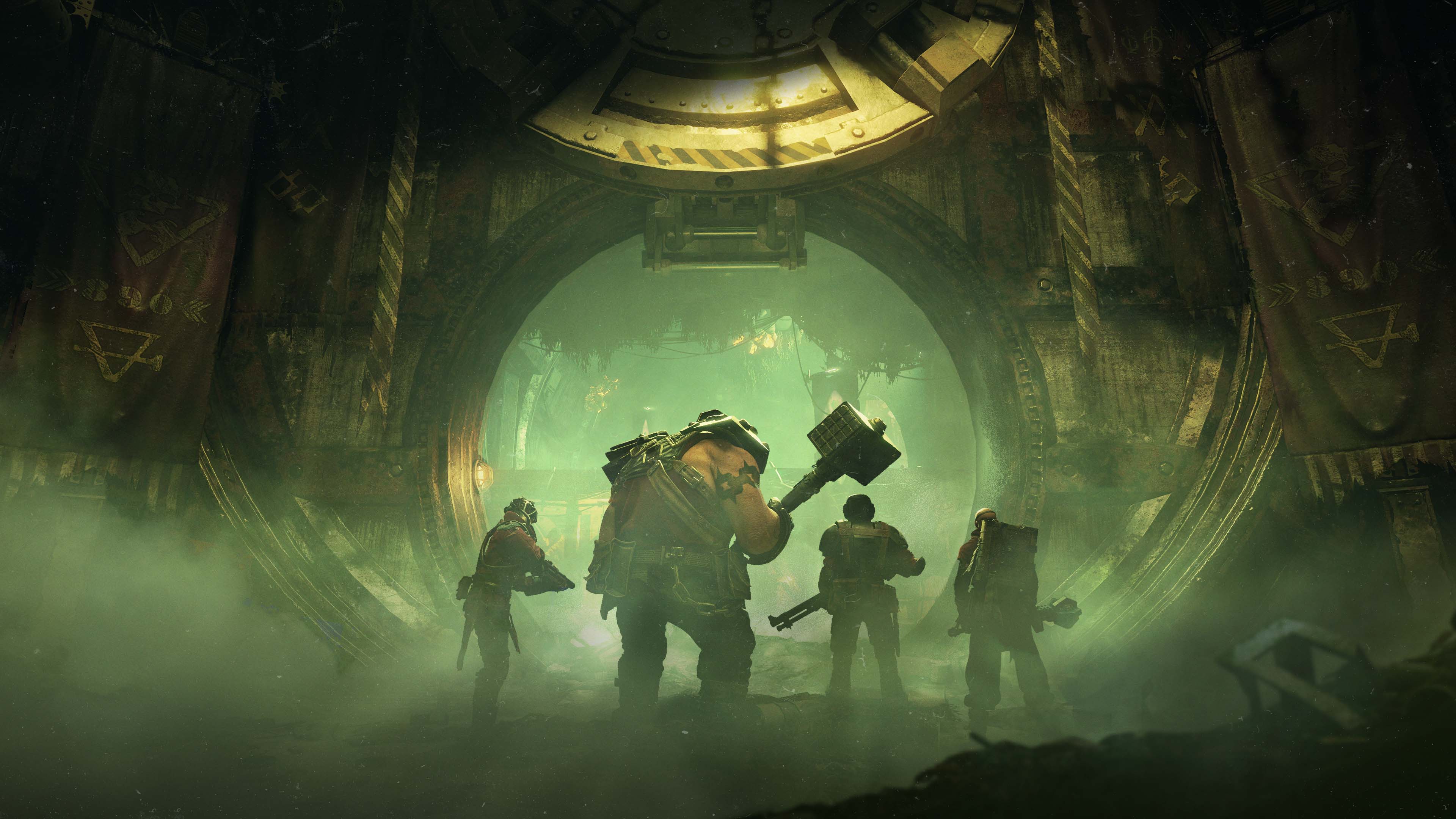
The narrative focus of the update is Terror in the Depths, a mini-campaign split into three interconnected missions. Agents of the Mourningstar are drawn into an operation that will see them collaborate with certain influential figures in Tertium, leading them to the territory controlled by the Ragged King, leader of the Water Cartel. This latter figure is, in fact, losing men in the city's labyrinthine underground systems, where something particularly unpleasant appears to have taken root beneath an old dam. Given that we’re talking about Warhammer 40,000, we can comfortably rule out the possibility that calling a plumber will solve this.
The campaign begins through Consignment Yard and Enclavum Baross, two missions already present in the game but enriched with new narrative elements, culminating finally in Spillway, the only level entirely new in the pack. It’s a producible choice and, overall, consistent with the intention of giving the narrative more continuity to a title that, historically, has always prioritised action over the organic development of its own story. Darktide has an extremely interesting universe, but has not always been able to tell it with the same effectiveness as it allows us to massacre its inhabitants. The mini-campaign structure thus represents a commendable attempt to give greater weight to events in Tertium, linking previously independent activities and creating a more recognisable narrative path. Nevertheless, the fact remains that, of the three publicised missions, only one is actually new.
The problem becomes even more apparent when you consider that unlocking new content is tied to completing the previous stages with the single character. Anyone who owns multiple operators and wants to immediately switch to a different class can therefore end up forced to replay the first two missions before gaining access to Spillway again. This restriction seems particularly questionable in a game built around experimenting with different classes, talents and gear. Forcing players already familiar with those levels to repeat them to unlock the only real new content risks turning an interesting idea into yet another artificial hurdle..
Spillway, a stroll through the heart of the Imperium
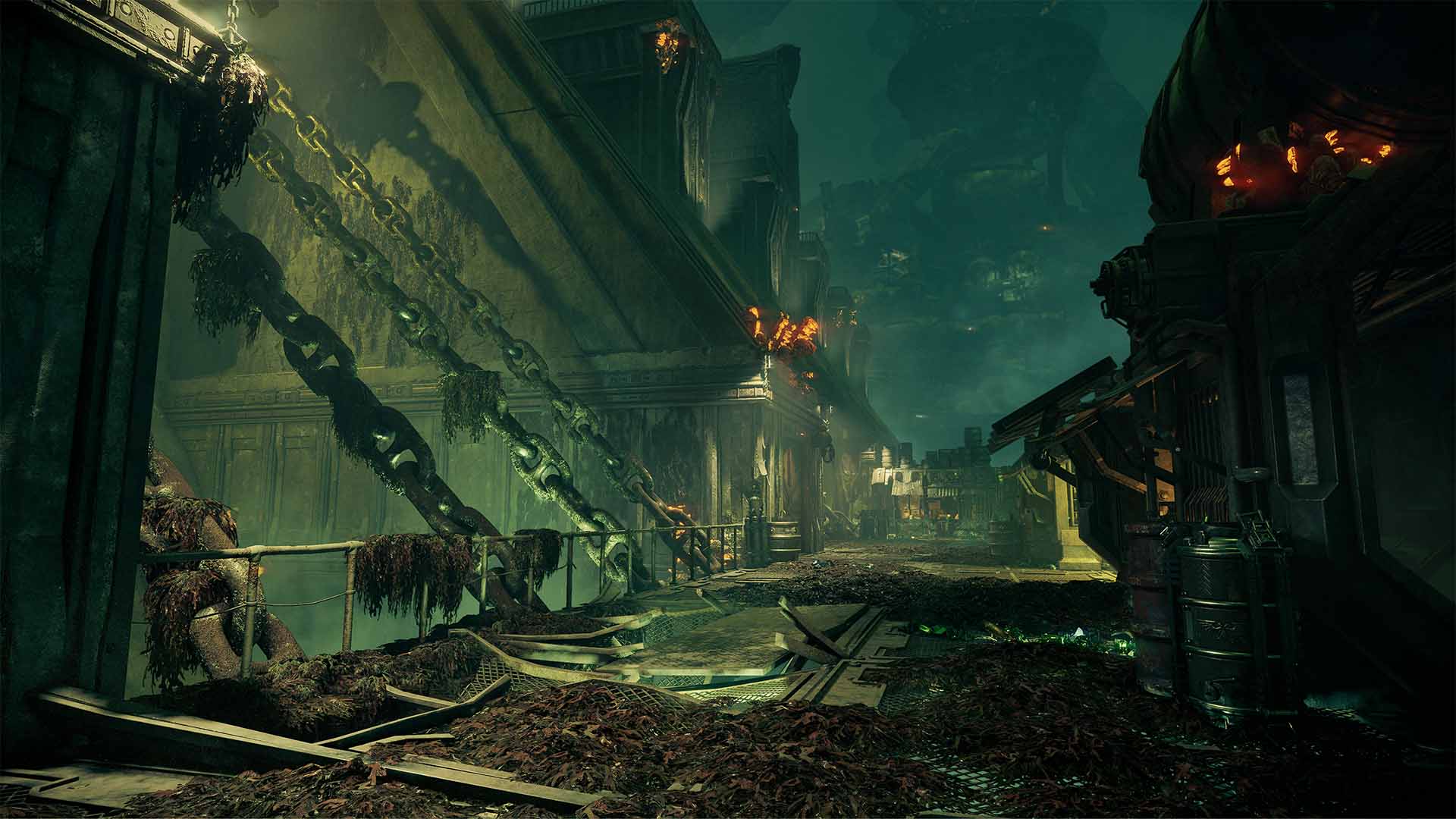
Fortunately, once you reach Spillway, the tone shifts significantly. The new mission is probably the most successful element of the entire update, especially for the way Fatshark manages to exploit the setting to create something distinctly different from the usual expeditions through Tertium. The adventure begins in a relatively familiar area, near the Torrent water treatment plants, but as you venture deeper into the city, the environments become increasingly claustrophobic, Nurgle’s corruption becomes more evident, and industrial architecture gives way to a disturbingly organic material.
Pulsating flesh, growths, boils, eyes and teeth seem to progressively consume underground structures, turning the level into a kind of massive, diseased organism.This is a perfectly coherent artistic direction that aligns with Nurgle’s imagination, and, above all, particularly effective at conveying a key idea: we’re not merely passing through an infested area, but we’re entering a place that appears to have been irrevocably transformed by the presence of Chaos. Spillway’s setting thus evokes that particular blend of disgust and fascination that Fatshark has always been able to recreate with great skill. Few developers manage to portray the grotesque side of the Warhammer universe with the same attention to detail, and, once again, environment design seems to be one of the game’s main attractions.
The real novelty, however, is not just about aesthetics.
The right path? It depends on how much you want to suffer.
With Spillway, Fatshark introduces a branching path system, a rather interesting feature for a game that has always relied on essentially linear progression as one of its core structural elements. During the mission, we face different choices and must decide which route to take, using clues gathered earlier to identify the safest path. The first branching point presents two options, while a later one offers even three, with the peculiarity that team members can choose different paths. A decision that, in a title where team cohesion can make the difference between completing a mission and four corpses left abandoned in the sewer system, introduces genuinely interesting possibilities.
The paths all lead to the same final destination, but choosing the wrong one exposes you to additional dangers, obstacles or extra objectives. Clues also change from one playthrough to the next, making it impossible to simply memorise a sequence of steps to follow with your eyes shut. It's a relatively simple mechanic, but introduces a strategic variable that can genuinely alter how a squad approaches a level.. We can choose to stay compact, following the player who has identified the correct path, or split up and risk facing extra difficulties without the immediate support of our teammates.
We're not facing a level design revolution, of course, but this is an experiment worth developing further. In a game where longevity largely depends on repeating the same missions, introducing elements capable of altering their structure may represent a more interesting path than simply increasing the number of enemies. Spillway suggests, therefore, that Darktide's future may lie not only in new levels, but also in levels capable of behaving differently with every session.
And frankly, it wouldn't be a bad idea at all.
The Prophet of Decay
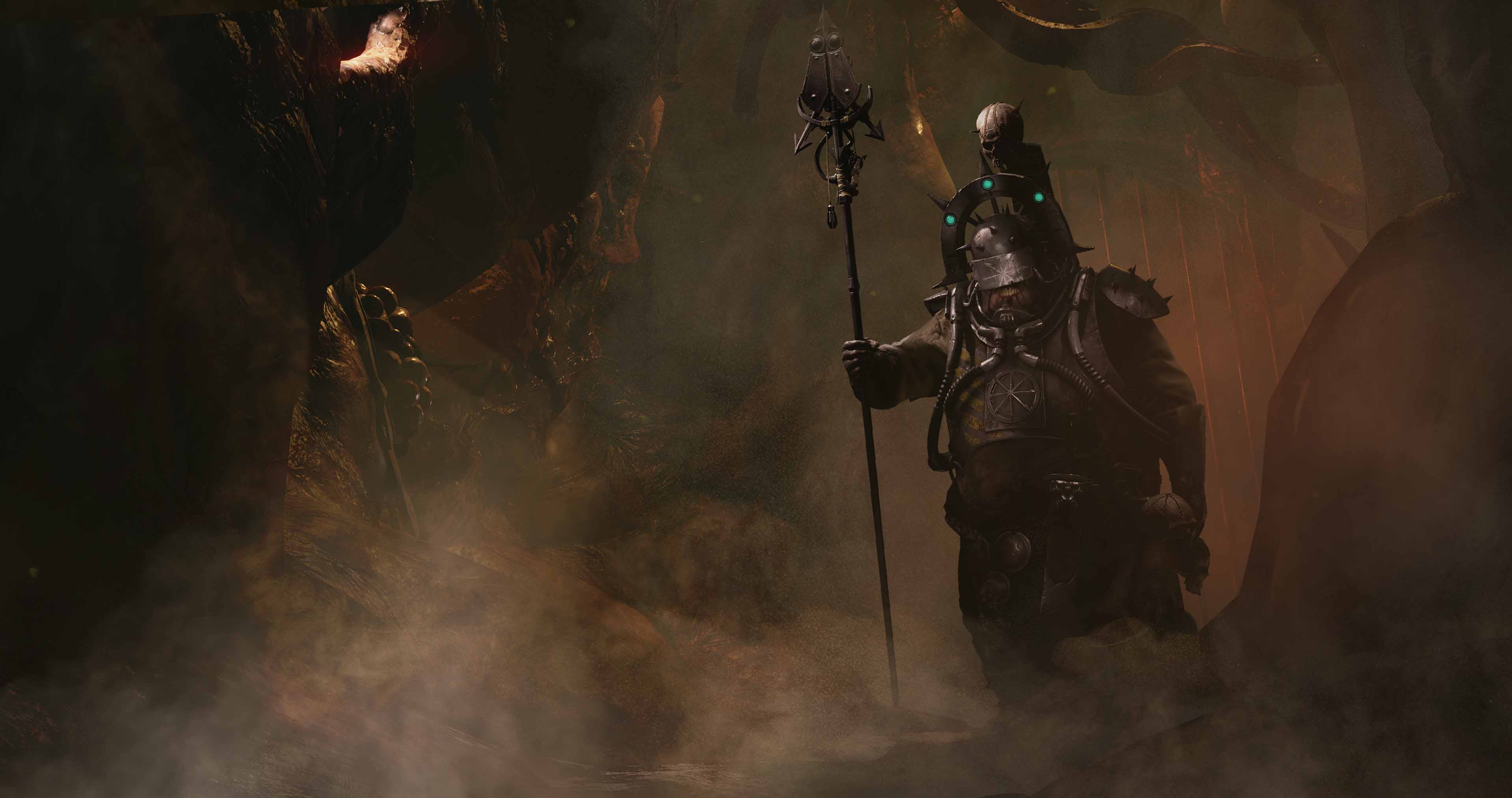
Awaiting us deep within Spillway, we also find The Prophet of Decay, a powerful Psyker corrupted by Nurgle who serves as the new update boss. The fight attempts to move away from the classic formula of a particularly resilient enemy to be smashed until health bars are depleted, instead focusing on a structure more tied to arena management and player coordination. The Prophet can indeed alter safe zones on the battlefield, create barriers capable of temporarily separating team members, and generate attacks requiring attention not only to the boss’s position but also to what happens around him. Among these are energy projectiles that chase players and must be destroyed before reaching them, as well as various phases in which the environment itself becomes an integral part of the combat.
The result is a boss who rewarded primarily for being able to understand the mechanics and coordinate with teammates, rather than relying solely on the offensive power of individual builds. The idea works, though some solutions inevitably remind you of what Fatshark already experimented with in fights against the Karnak twins. Moreover, once the Prophet’s defences are breached and the windows for dealing consistent damage are reached, the fight tends to become much more traditional.
Not all of its mechanics, however, seem to have been received in the same way. In particular, the clarity of safe zones during the later stages of the fight has drawn some criticism, especially on the harder difficulties, where a miscalculation of available space can quickly compromise the team's survival. It's a delicate balance: a complex boss should reward those who interpret its cues accurately, but those cues must remain clear enough for the player to distinguish their own mistake from ineffective visual communication. Fatshark has already responded with post-launch hotfixes, tweaking some combat elements and fixing issues related to enemy management and stability.
Overall, however, The Prophet of Decay is an interesting addition, mainly because it tries to ask for something different from pure damage output.It’s not necessarily the most memorable fight ever seen in Darktide, but it’s a commendable attempt to make bosses more complex and less reliant on the sheer amount of damage we’re able to deal.
You're new weapons, because the Emperor doesn't pay for overtime
A Darktide update wouldn't naturally be complete without something new to slaughter heretics, and Depths of the Damned doesn't disappoint on this front. The arsenal is expanded with six weapons, though it's important to clarify that these aren't six entirely new weapon families: the pack mixes new types and variants of existing gear.
Among the most interesting additions, without a doubt, is the Krourk Mk IIa Cruncher, a massive two-handed hammer designed for Ogryn that appears to have been crafted with a precise aim: turning whatever lies in its path into a legal matter for an expert. The weapon excels in heavy hits, has strong stagger potential, and delivers wide enough attacks to handle large groups, while also offering the ability to further amplify specific offensive combos to increase their effectiveness.It’s an addition that fits the class’s needs well, expanding its combo options without unnecessarily reinventing its role. After all, if you’re an Ogryn already wielding a very large hammer, the most natural technological evolution probably involves building one even bigger.
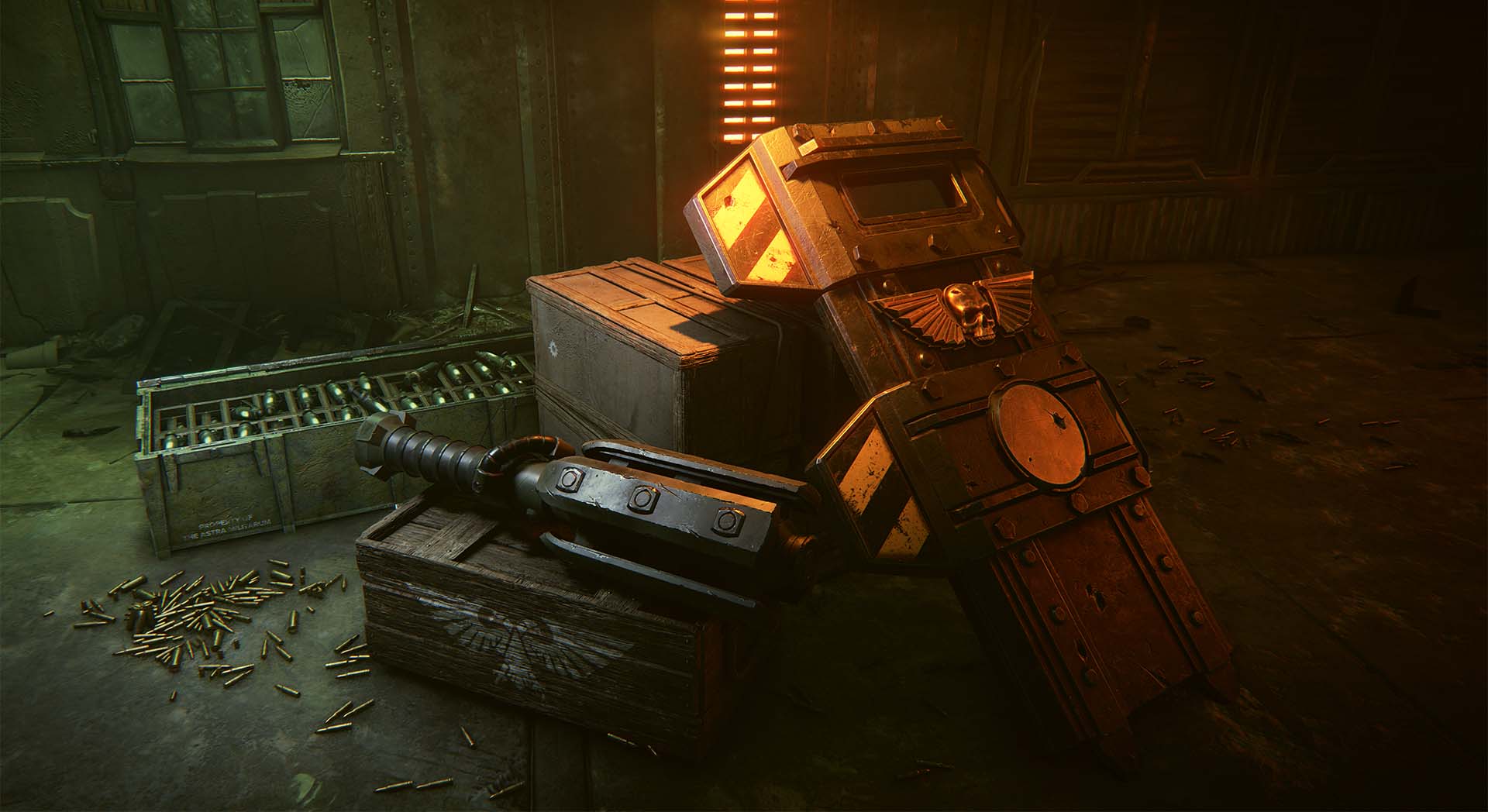
To round off the updates dedicated to our giant friends, we find the Lorenz Mk VII Thugshot, Lorenz Mk VII Thugshot, a variant of the Kickback shotgun that uses a single, particularly powerful projectile, and a new version of the mace-and-shield combo, the Gromm Mk I Battle Maul & Mk V Slab Shield, more focused on targeted offensive sequences. Human classes instead receive theAccatran Mk III Huntsman's Shotgun, a pump-action rifle designed to deal significant damage at close to mid-range, along with new variants of the Crusher and the Double-Barrelled Shotgun. Particularly curious is the fact that the Huntsman has abandoned special ammunition in favour of an integrated torch – an apparently mundane addition but potentially useful in situations where visibility becomes integral to the challenge.
The new weapons don't fundamentally alter the combat system, which remains one of the strongest aspects of the whole production, but significantly expand the possibilities for personalisation and, above all, reintroduce fresh reasons to experiment with different builds.And this, probably, is their most important contribution. Darktide continues to work because it manages to make even a repeated activity hundreds of times over incredibly satisfying, as long as we’re given the chance to approach it with different tools and strategies.
A new hammer may seem unimpressive on paper. Until it starts crushing heretics.
The real earthquake is in the roots of talent
Focusing solely on the new mission and weapons would mean overlooking a substantial portion of the work done by Fatshark. Depths of the Damned introduces a major rebalance of classes and talent trees, affecting some of the mechanics that had, in recent updates, heavily influenced build construction.
The four original classes receive changes aimed mainly at reducing the number of nodes dedicated to simple stat boosts, leaving more freedom in choosing abilities that genuinely alter gameplay. Even the Skitarii is undergoing targeted adjustments, while several existing weapons receive balance tweaks. The stated goal is to make buildcraft less tied to mandatory paths and more focused on meaningful choices. A shareable philosophy, especially in a game where configuration depth occasionally risks turning into a near-mathematical search for the single truly competitive combination.
Among the most significant changes we find are the updates to the Zealot, featuring a rewritten Until Death that reinforces his identity as a combatant capable of surviving on the edge of the blade, and to the Ogryn, whose tree is made more accessible through a redistribution of stats and an increase in base Toughness. Until Death that reinforces the combatant’s identity as someone capable of surviving on the edge of the blade, and to the Ogryn, whose tree is made more accessible through a reworked stat distribution and a boost to base Toughness.
The most significant change, however, concerns the Golden Toughness. Golden Toughness. This particular form of protection had gradually become a major component of the game's economy, allowing it to fully absorb particularly dangerous attacks even when only a minimal amount remained. With the update, this immunity to excess damage is removed: Golden Toughness continues to provide additional protection, but can no longer automatically neutralise the full effect of an attack simply because just one point remains. This is an important change because it reduces the power of some defensive abilities that risked becoming practically mandatory at higher difficulties, restoring greater importance to positioning, dodging and enemy reading. reduces the power of some defensive abilities that risked becoming practically mandatory at higher difficulties, restoring greater importance to positioning, dodging and enemy reading.
Fatshark has accompanied this update with adjustments to particularly dangerous enemies, such as Poxburster and Sniper, in an attempt to prevent the protection revision from simply resulting in indiscriminate increased mortality. Naturally, altering systems so deeply entrenched also means changing balances that the community had come to know and exploit over the years. Not all builds will retain the same effectiveness, and more experienced players will inevitably have to reassess some of their habits.
But the direction seems sensible: Darktide should reward the ability to face threats, not just the ability to neutralise them through a particularly efficient combination of defensive talents.
The Emperor protects, but new content is not infinite
To complete the update, we also find the temporary event Allies and Adversaries, available until 13 October, which invites players to complete the missions of the new mini-campaign in exchange for resources such as Plasteel, Diamantine, Ordo Dockets and a cosmetic emblem. There’s also a new rotation of premium aesthetic items dedicated to the Death Korps of Krieg 158th, inevitably drawing the attention of fans of this particular Imperial regiment. All of this contributes to the impression of a quite rich update, especially for those returning to Darktide after a period of absence.
For the more dedicated players, however, the conversation changes.
Once Spillway is completed, try out the new weapons and adjust your builds following the rebalance, the amount of genuinely new content remains relatively modest. A mission, however well crafted and featuring alternative paths, is unlikely to sustain weeks of excitement on its own, especially for those who have already spent hundreds of hours navigating the streets of Tertium. And this is probably the update's main limitation.
Fatshark seems to have increasingly understood how to build interesting missions, how to tweak the combat system, and how to highlight the Warhammer 40,000 setting — but still relies on a content distribution model that alternates highly appreciated new material with periods where repetition inevitably dominates. Depths of the Damned improves Darktide, but doesn’t really change its relationship with its longevity.