

The trailer for Bionic Bay had generated in us an extraordinary curiosity: fluid jump sequences, biomechanical scenarios wrapped by neon lights and the anticipation of new powers such as the “change” of position and temporal manipulation allowed a platformer capable of elevate gender beyond habitual canons. From the beginning, the promise was clear: an adventure that mixed retro aesthetics and modern lighting innovations, all seasoned by an inspiring rhythm that invited each movement to perfect. These expectations were also fed by the name of Juhana Myllys, already author of Badland, and from the partnership between Psychoflow Studio and Mureena Oy, reality known for creative experiments in the indie world.
However, as often happens when you switch from the hype to the finished product, comparison with the reality of the game showed lights and shadows. If on one side Bionic Bay keeps intact its visual appeal and some Intuitions of gameplay, on the other a certain emerges dissonance between the potential anticipated by the trailer and the actual depth offered by adventure. In this review we will try to analyze in detail every aspect of the title, highlighting merits, defects and that sense of opportunity partially missed.
This content is provided by YouTube. To view it, you must allow external content. Activation may result in data being shared with the third party.
A silent world, perhaps too much
Bionic Bay opens with a short animated prologue: a scientist, victim of a catastrophic experiment, is catapulted into a biomechanical world at the edge of imagination. There is therefore a background of scientific mysteries, sentient machinery and a desperate escape. However, once the introduction is exceeded, the narrative element vanishes almost entirely, leaving room for gameplay free of emotional or narrative references. The levels follow without textual intermezzos or videos, and they lack fully collectibles or environmental clues that enrich the worldbuilding. The feeling is to be dragged by mechanics more than by a real story. The choice to focus on a minimalist narrative, at Journey, remains potentially valid, but here it is less incisive because of poor construction of the world and lack of emotional involvement.

Reactive promises, rigid solutions
The trailer had promised dynamic gameplay, based on realistic physics and powers able to rewrite the platformer rules. And actually, Bionic Bay introduces “The Swap”, a mechanic that allows to exchange position with objects in the world. This is a smart and fun idea, but is reproduced without substantial variations for most of the game. Only later they unlock ChronoLag (time slowdown) and manipulation of gravity, but both skills are underused, relegate to too short sections to leave the mark.
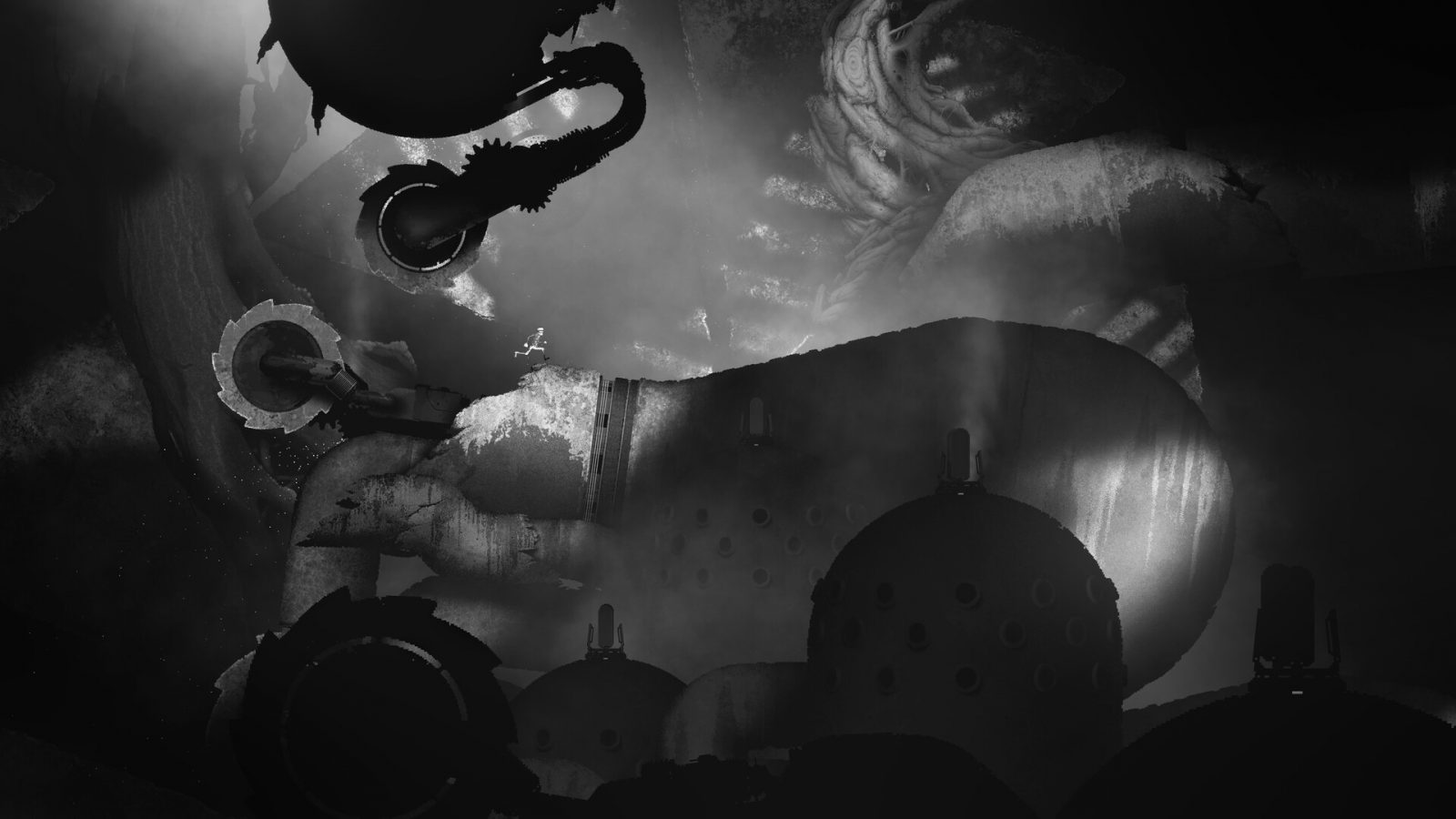
The structure of the levels is extremely linear: each puzzle has only one solution, no deviation, no alternative path. Checkpoints, although comfortable, completely eliminate tension: the error never has a real cost. In a game that squeezes the eye on speedrunners, there is no real incentive to optimizing movement or discovering secrets. The rhythm, finally, never really evolves. After understanding the basic pattern of the game, the next sections turn out predictable and devoid of new conceptual challenges.
Biomechanical beauty and copyright pixels
If the zoptical gameplay, the artistic direction is undoubtedly the flagship Bionic Bay. Every level is a visual work that alternates expressionist chromatic contrasts, lights to the neon, disturbing shadows, all packaged in one pixel art inspired and refined. The game world appears deep and credible, also thanks to the wise use of parallax scrolling and the composition at multiple levels of the seabeds. The animations of the protagonist, albeit not always perfect, contribute to giving weight and style to the movements, transforming each jump into an aesthetic microspect.

Too bad the environmental variety is rather limited: rusty tubes, metal roots and neon panels repeat until exhaustion. A greater visual differentiation of biomes – icy environments, rocky areas, aquatic sections – would have greatly benefited from the memorable experience. Even the UI follows a minimal philosophy, leaving the screen free and giving centrality to the action. An elegant choice, but that ends up highlight even more the structural simplicity of the levels.
In conclusion
Bionic Bay is a fascinating work, halfway between artistic experimentation and traditional platform puzzle. The game manages to marvel with its aesthetics and to tease with some gameplay findings, but it never really manages to evolve. The trailer illusive us with the idea of a revolutionary experience. Some moments really believe us, and when they happen, the game shines. But the lack of variety, reduced narrative to the minimum and a level design too school make the initial enthusiasm fade over time. The online mode dedicated to speedrunning can offer some extra satisfaction, but a reduced base player and the absence of stimulant rankings limit its potential. Bionic Bay is a beautiful showcase for those looking for aesthetics and precision, but those looking for a deep narrative or significant mechanical evolution may be disappointed.