Dear reader,
Santa this year arrived with a decent head start and brought Kotaworld a nice gift that I rushed to claim like an eagle on a succulent prey. Apparently, we’ve been good this year and my treasure... Ahem, I mean the title to review this time is a “triple A” from Square Enix.
If you’ve read any of my reviews, you already know with certainty that I have a true passion for turn-based role-playing games (or GdR, or JRPG, or call it however you like) — but what I’ve never confessed to you is that this strength of my gaming experience actually stems from my past as a young nerd. I spent all my time at secondary school eating bread and Square Enix, with my classmate Luca A. (with whom, to my regret, our friendship ended), the ultimate Final Fantasy fan, who introduced me to the magical world of Square by telling me, during every sacred break, everything that happened during his playthrough of the seventh chapter of that saga. As a failed non-PlayStation lieutenant, every time I was invited to his house to do homework, we inevitably indulged in our gaming needs, pad in hand and eyes on the screen. I was simply enchanted.
From Final Fantasy VII to VIII, the step was short and I also bought a Playstation. On PC, meanwhile, I took “steps back” and returned to the distant 1990s to try V and VI, which, despite the graphics, were games whose story and gameplay captivated me deeply. With the advent of new console generations, I became increasingly disillusioned by the new chapters of Final Fantasy, and after growing bored with IX and losing patience with X, I realised that Square was now also losing its edge. Gems like "Front Mission" or "Parasite Eve" were now distant echoes of the past. Everything revolved around graphics and the content seemed no longer to sell.
You can imagine the editorial frenzy when the news arrived that we’d have to review Bravely Default II. The reason? Despite the awful title ("coraggiosamente default" — I hope it translates in Japanese as something else, because even “uncontrollable marmots” would sound better), Square Enix’s title is a great JRPG that bravely chooses to return to the roots of my nerd career and retrace the steps of Final Fantasy VII.
The game
The project is perfectly balanced: despite occupying a modest amount of gigabytes in memory, the game stretches across many hours, offering the opportunity to complete side tasks and unlock secrets, all while progressing through the main story.
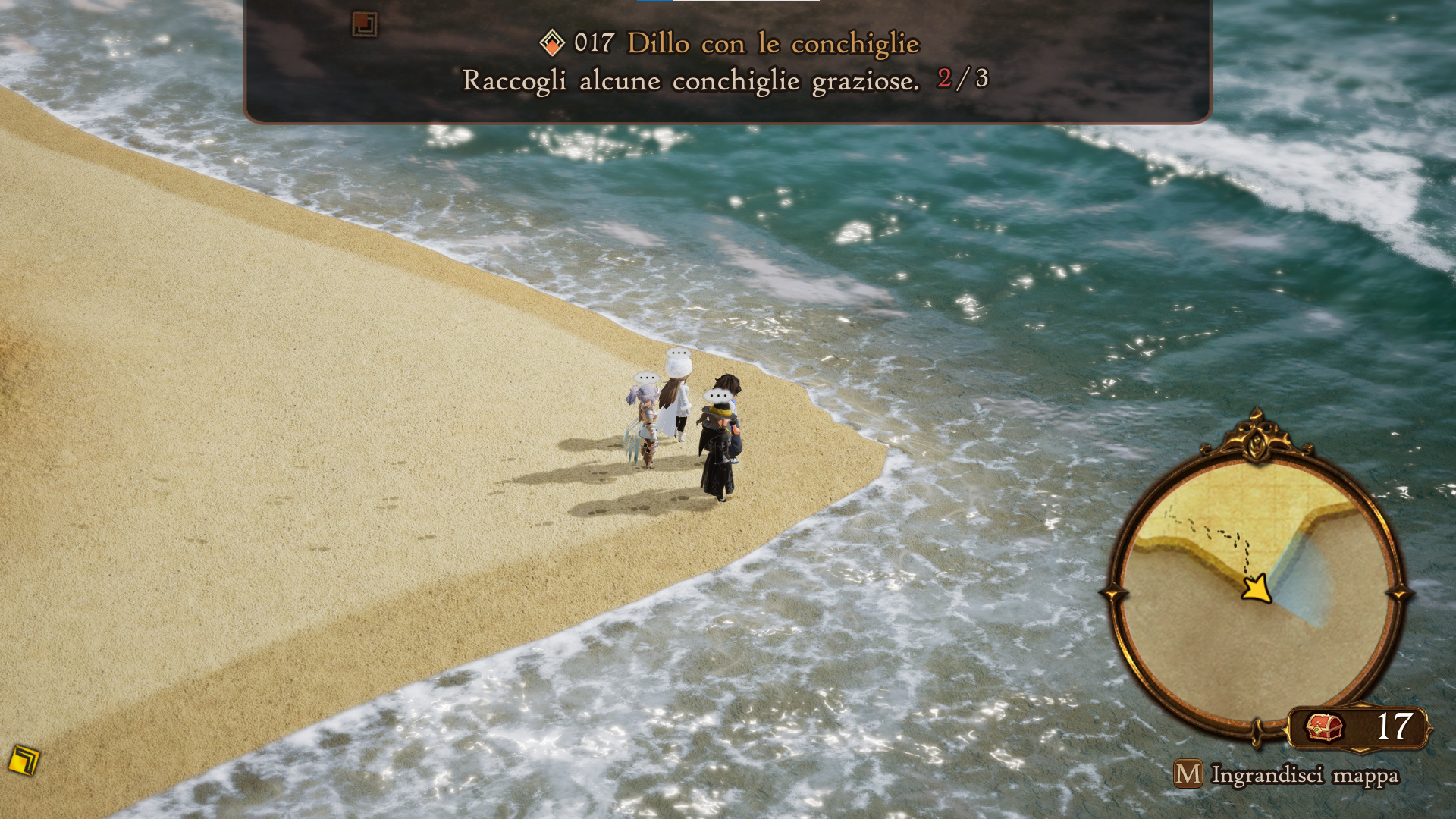
Let’s be clear, Bravely Default II was developed for Nintendo Switch and only later (specifically on September 2, 2021) released on Steam, so it was obvious to expect some “sacrifices” in terms of graphics, but as I see it, these were “intelligent” sacrifices, since they likely allowed the development team to focus on crafting a convincing story and atmospheres I’d dare call magical.
Unlike how it often happens, Bravely Default II doesn’t suffer from the multi-platform disease: the control system is decent (though I still recommend the gamepad over keyboard and mouse) and the PC gaming experience is decidedly good. In two words: it doesn’t even feel like a “port” from the Nintendo platform.
The story
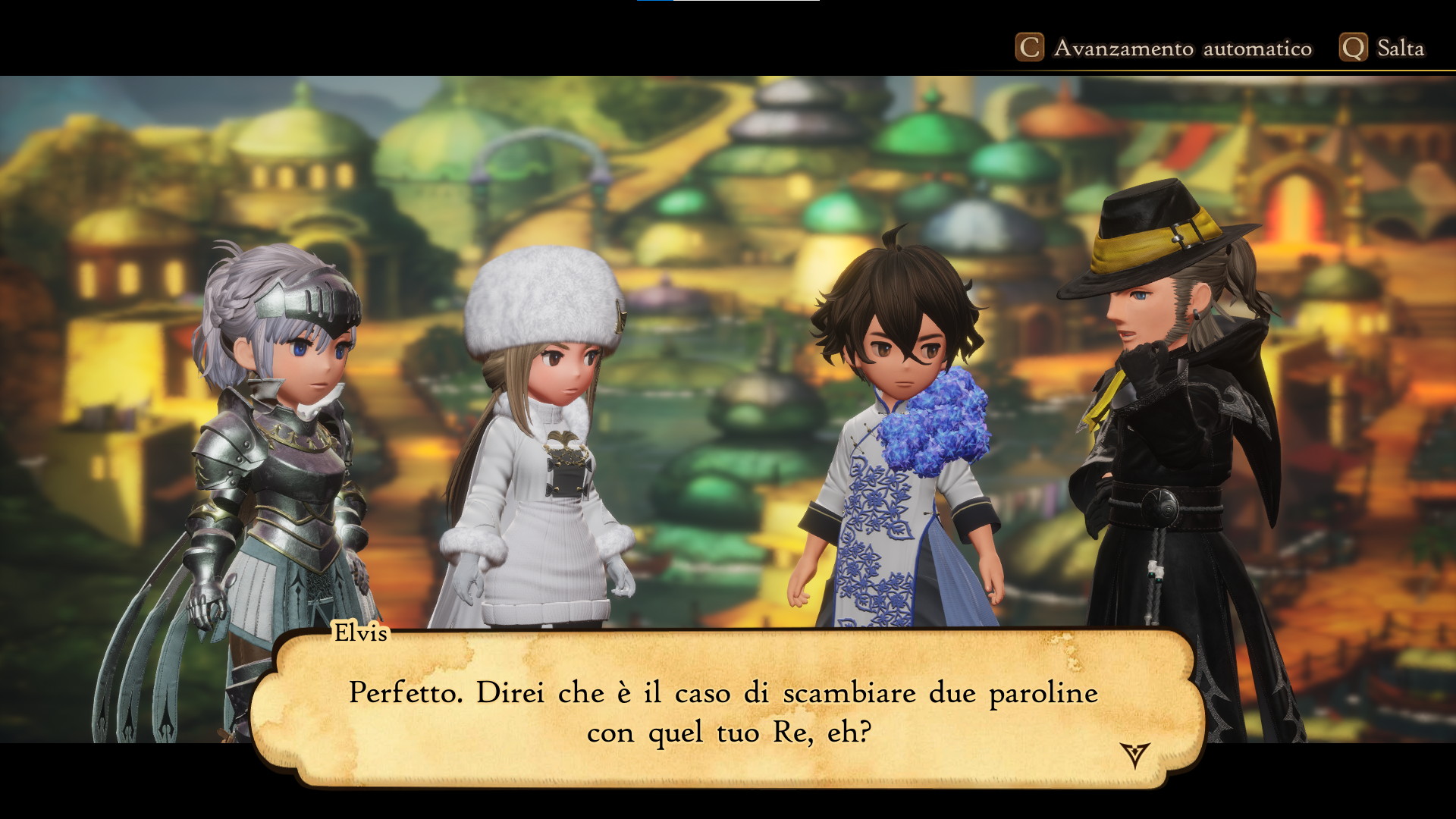
Regarding the story, Bravely Default II draws heavily from the classic Final Fantasy: a young "nobody" (Seth) ends up in the wrong place at the right time and soon finds himself surrounded by three other misfits due to unforeseen circumstances: the "party" must travel across the continent (Excillant) to retrieve the elemental crystals of wind, water, earth, and fire, stolen by Musa, the destroyed homeland of one of them. Over time, the four will discover they are the "heroes of light" of their era, drawn to the crystals to drive out an ancient evil that periodically returns to disrupt peace. The narrative is divided into static dialogue (comic panels featuring the heroes’ faces), dynamic dialogue with character animations, and full animations with scenes in full Square style.
Audio and Video
The graphics blend stylised "puppet" (chibi) animation of heroes, monsters and non-player characters (NPCs or PNGs), carefully crafted, with incredibly hand-drawn backgrounds that depict the settings of many scenes. I realise this style may not appeal to everyone, but, from my perspective, I can only offer a positive assessment. Another strength of the title lies in its audio department, which doesn’t fall short of Nobuo Uematsu (the legendary composer for FF). I admit some tracks seem to have been copied from Final Fantasy (for example, the battle soundtrack), but... the winning team doesn’t change, right? In any case, you should be curious and go listen to the game’s soundtrack; the composer even has a profile on Spotify: Revo.
Game mechanics
The game’s system reminds me a lot of Final Fantasy’s chapters 5 and 6, with a “job system” developed in a slightly different way. The party will have access to an increasing number of “missions” as you progress through the game, and the abilities learned by leveling each of these can be used later in the combat menus, depending on the primary and secondary jobs selected. Some abilities (especially passive ones) will be available regardless of whether they are “equipped” in the dedicated abilities menu.
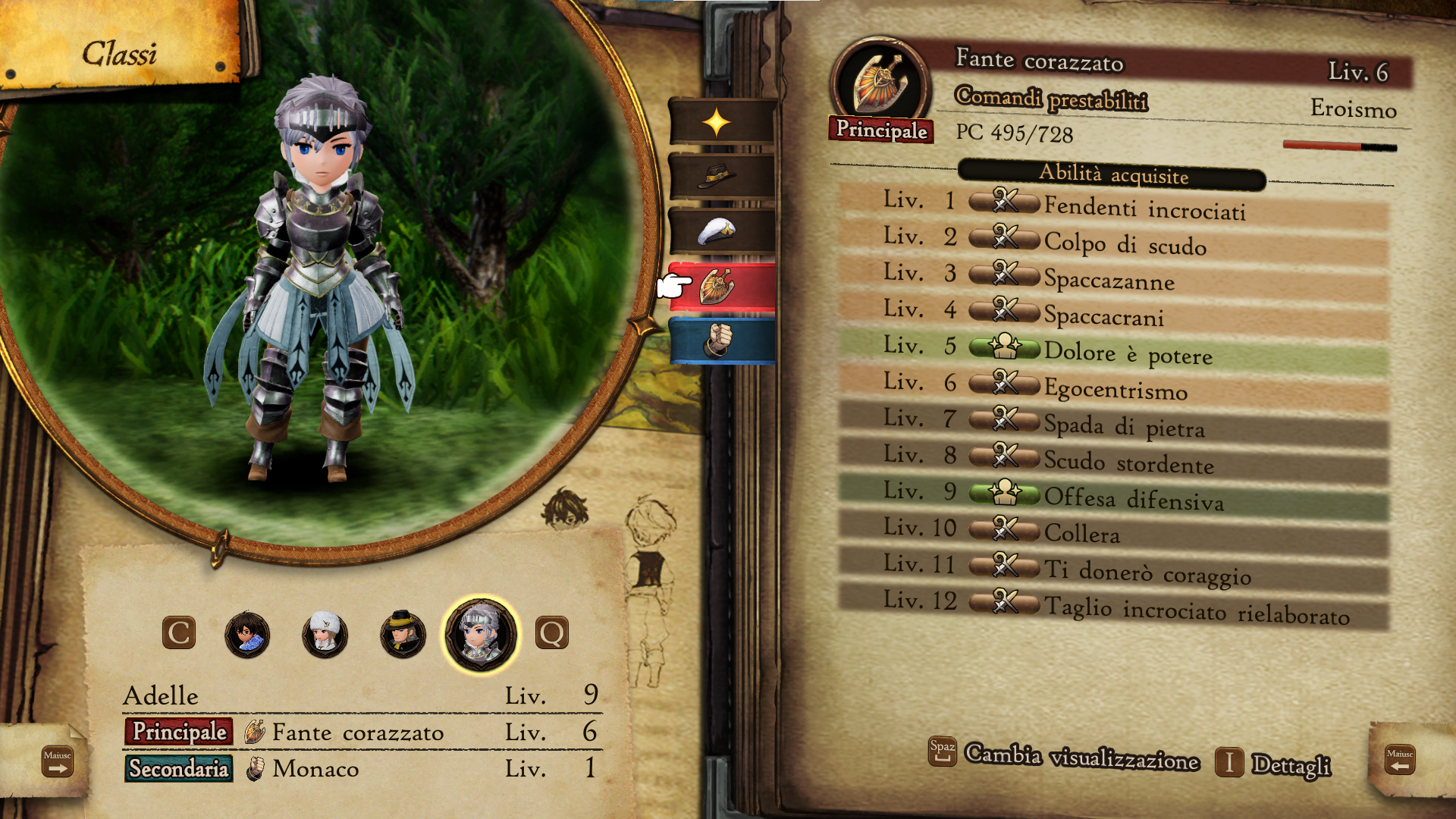
The "job system" works well with combat, and although grinding experience can at times be unenjoyable and lead to a monotonous gaming experience due to battles that eventually become too easy, difficulty can be increased from the main menu and make encounters decidedly more "tasty". Regarding combat, let’s briefly return to the game’s title: I can only imagine that "Bravely Default" derives its name from two core actions of the combat system, namely "brave" and "default". The first command allows an additional action to be performed by the hero (up to four), but its drawback is that the hero must rest for an equal number of turns afterward. This enables the hero to quickly dispatch uninteresting enemies with up to 16 attacks (four per character), greatly simplifying the experience for those eager for experience and level-ups. "Default" instead improves the command that in Final Fantasy would have been "defense" (completely useless, in my opinion) and allows for significant damage reduction in exchange for regaining an action point, which can be spent via the "brave" command. Another element that greatly improves FF’s weaknesses is the ability to set animation speed during battle, allowing players to fully enjoy a serious combat experience (it seems all roses and flowers at first, but bosses are a true challenge) and to speed up easier battles.
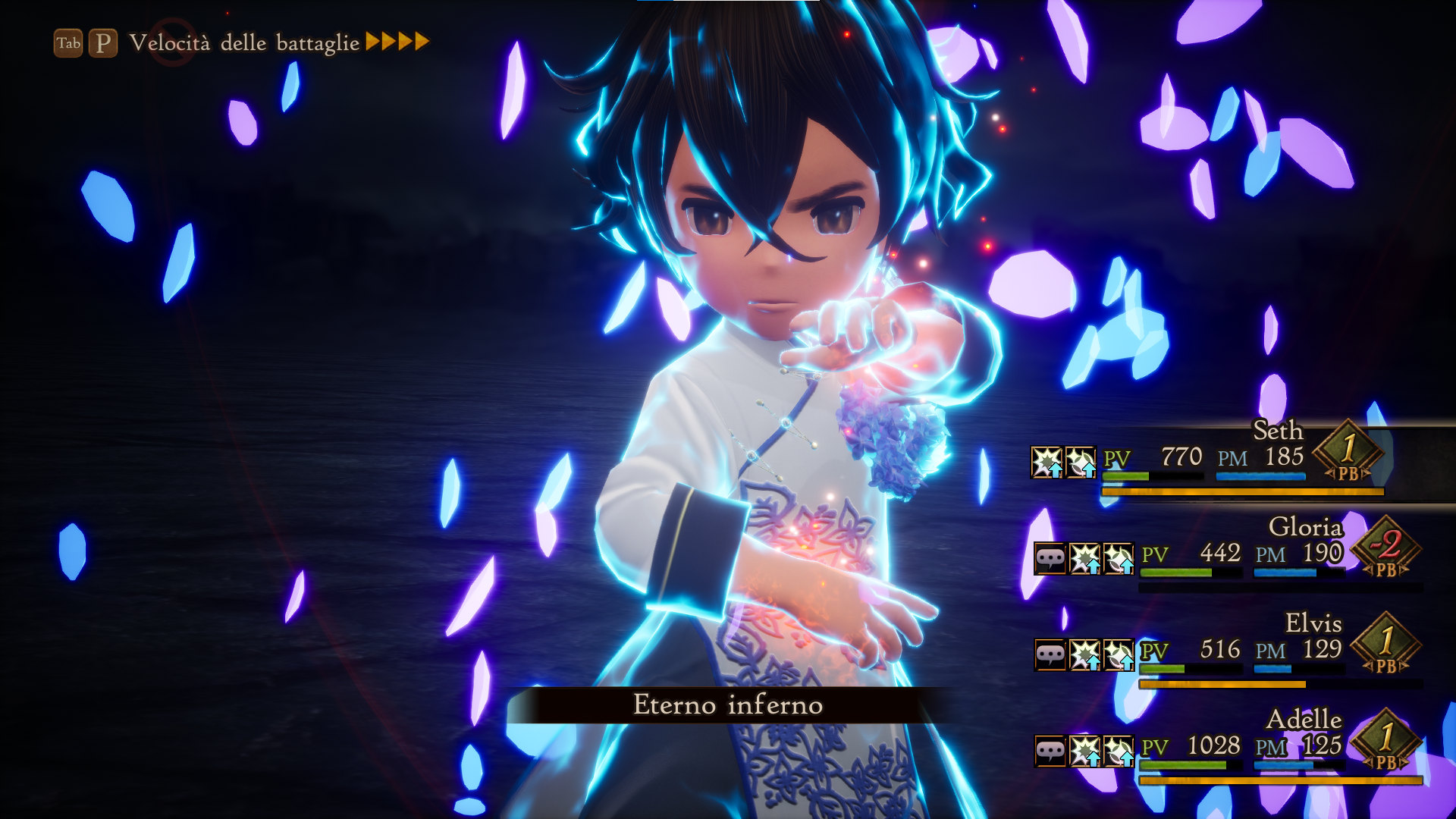
Limit break (called "Speciale" in Bravely Default) and status alterations are instead old school, something that still works and is far from unpleasant.
Unlike its more famous sibling, in Bravely Default you will see monsters moving across the map of the continent, allowing you to decide whether to face them or not. There will still be some enemies capable of running faster than you, so it’s wise to confront them head-on before the encounter begins to avoid being caught from behind and suffering a disadvantage. Another mechanic that adds a layer of complexity is represented by the day-night cycle (with appropriate and pleasant lighting effects), which triggers specific abilities or causes monsters to roam the map.
Conclusion
A final nod to the voice acting and translation, both done with care and free of slips.
TLDR; Bravely Default II has all the cards in play to become Square’s next “sacred monster”, once again surprising with a title developed with care and attention. Currently, BD2 is available on Steam for €59.99: high, but fully deserved.
About the Author